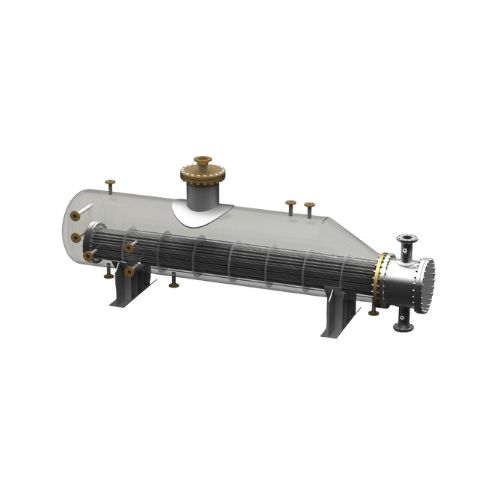
Heat exchanger with below for high temperature gradient applications

Heat exchanger with below for high temperature gradient applications

Our Heat Exchangers with Bellows are specially designed to handle high temperature gradient applications, where significant differences in temperature between the shell-side and tube-side fluids can lead to thermal expansion and stress. The inclusion of expansion bellows compensates for these thermal movements, ensuring safe, reliable, and long-term operation under demanding process conditions.

Engineered in accordance with ASME, TEMA, and IS standards, these exchangers are ideal for industries that require precise thermal control, mechanical flexibility, and enhanced durability.

Glass Bead Blasting Price And Quantity

  • Price 10000 INR/Unit
  • Price Range 100000.00 – 1000000.00 INR/Unit
  • Minimum Order Quantity 100 Unit
  •  

Glass Bead Blasting Trade Information

  • FOB Port Vadodara
  • Payment Terms Cash Advance (CA) Cash in Advance (CID) Cheque
  • Supply Ability 1000 Unit Per Week
  • Delivery Time 7 Days
  • Packaging Details Standard Packaging
  • Main Export Market(s) Asia Australia Central America North America South America Eastern Europe Western Europe Middle East Africa
  • Main Domestic Market All India

Product Description

Glass bead blasting is a type of abrasive blasting process that uses small, spherical glass beads as the blasting medium. The beads are typically made from soda-lime glass, which is durable and provides a smooth, shiny finish on the surface being treated. The process is commonly used for surface cleaning, smoothing, polishing, and deburring of metals, plastics, ceramics, and other materials.

Glass bead blasting contains:

  1. Soda-lime glass: This is the primary material used to make the beads. It consists of a mixture of soda (sodium carbonate), lime (calcium oxide), and silica (silicon dioxide), along with other minor ingredients like alumina and magnesium oxide.
  2. Fine, spherical beads: The beads are uniform in size and shape, typically ranging from 50 to 400 microns in diameter, depending on the specific requirements of the application. These beads are non-abrasive but have enough impact force to clean and smooth surfaces.
  3. Surface cleaning agents (optional): In some cases, detergents or special cleaning solutions may be used in conjunction with the glass beads to enhance the cleaning or polishing process, although this is not always necessary.

The key benefits of glass bead blasting include its ability to provide a smooth, uniform finish without damaging the underlying material, making it ideal for applications where aesthetics or material integrity is important.
Our Popular Products

Pitched Bladed Turbine

Hydro-foil type

Gas Injection Agitator System

Reaction Vessels

Let's get in touch

Got a project to discuss?
We'd love to hear from you.


How We Work?

1. Submit Your Project Requirements

2. Our Expert Team Will Review & Contact You

3. Customized Solution & Proposal

Get in touch

Let us know who you are and what you're looking for below, and we'll get back to you within 24 hours.